Thu-Trang was born in Saigon and spent her early childhood there, in a city shaped by a war that had already ended before she was born. Her family carried its effects long after. When she was still very young, they made the difficult decision to flee Vietnam by boat, searching for safety and a future they could not find at home.
There had been other attempts before the one she remembers most clearly. During one of them, her family was captured and imprisoned. Their final attempt saw them making it across the South China Sea to Pulau Bidong, a small island in Malaysia that was a temporary refuge for many Vietnamese families.
On 29 April 29 1988, just before her 9th birthday, Thu-Trang and her family arrived in Sydney and Australia became her home.
Her parents had once been teachers, but in this new country they had to start from scratch.
“Mum and Dad worked hard, starting from nothing, doing work where they could get it,” Thu-Trang remembers.
Her father worked night shifts in a bakery, while her mother worked as a ‘thread cutter’ alongside other Vietnamese women in the textile industry. They worked hard and lived carefully, teaching their children to be resourceful and value what they had.
Thu-Trang remembers her childhood not as one of loss, but something steady and ordinary.
“My parents did a great job at cushioning negative impacts. I grew up knowing we had to make do with what we had and live within our means. We missed out on some things, but didn’t really feel bereft or lacking.
“Resettlement was something we just did, because there was no other way.”
Thu-Trang joined her cousins at school and found joy in learning. Her parents placed a strong emphasis on education, and she and her siblings grew up studying hard and making the most of every opportunity.
It was not until later in high school that she started to noticed the complexities of race and culture more sharply. At university, she began writing and organising conversations about identity and belonging. She helped create a small volunteer group that grew into a broader initiative, bringing students together to share stories and explore cultural leadership and diversity.
Her career grew from these experiences. She started in technology and law, then moved into public policy and international development, focussing on learning, systems and social change. Along the way, she came to understand how important it is to have a voice, and how much power there is in telling stories.
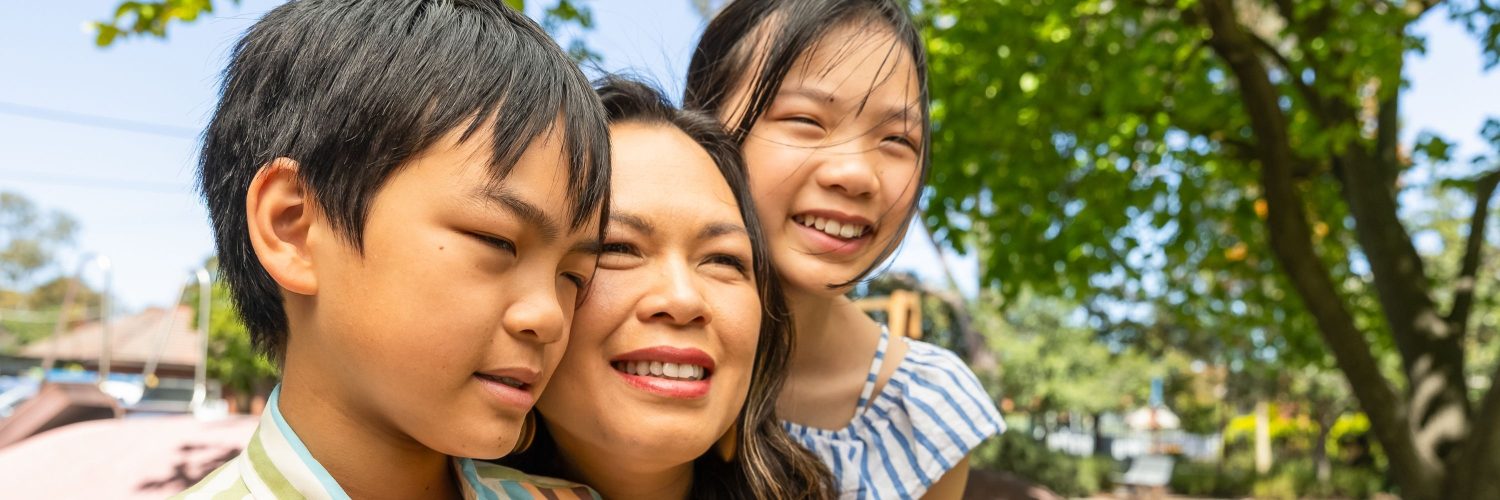
Life eventually took her to Melbourne, where she started her own family. Today, she’s a mother to Sean and Karina, and has been intentional about keeping them connected to their Vietnamese roots. The family spent 2018-19 living in Vietnam, giving the children a chance to experience the culture and place that shaped their mother’s early life.
Thu Trang shares, “After observing my nephews grow up, and them reflecting on their refugee and Vietnamese roots, I am more conscious about sharing these stories with my kids.”
Sean says he feels proud of his mother and their family’s journey, and lucky to be where he is today. He sees how something difficult, like war, can still lead to good things, including the life they have now. For him, their Vietnamese background shows up in the food they eat, the culture they share and the values they carry.
Karina describes her mother’s story as both sad and inspiring. She feels proud too, and loves the food from Vietnam.
For Thu-Trang, the story of her own life is part of something much larger. She reflects on Australia welcoming one million refugees as a significant milestone, one that speaks to generosity and possibility. At the same time, it’s a reminder of how many people have had to leave everything behind. She thinks often of the parents who made those decisions, risking so much because they had no other choice.
She also remembers the communities that helped her family begin again. In her early days in Australia, support came from many places, with a strong spirit of care and collective effort.
“In the early days, as I understood it from my parents, so many charities helped our resettlement, along with our family members in Sydney and fellow refugees and migrants, people who may have had little materially, but had so much spirit of generosity.”
Today, Thu-Trang’s sense of community stretches across cities and countries. It includes people in Melbourne and Sydney, as well as connections around the world. Her story, like many others, continues to move between places, shaped by memory and belonging.
Acknowledging Australia’s milestone welcome of a million refugees, Thu Trang believes that one million shouldn’t be the limit. With so many people displaced by conflict, persecution, and climate change, she sees a need for even greater compassion and action.
Her own journey is one example of what can grow when people are given the chance to start again.